

What is digital transformation?
Digital transformation is the integration of digital technology into all areas of a business, fundamentally changing how you operate and deliver value to customers. It's also a cultural change that requires organizations to continually challenge the status quo, experiment, and get comfortable with failure.
What is Industry Revolution 4.0?
The Fourth Industrial Revolution or Industry 4.0, is the ongoing transformation of traditional manufacturing and industrial practises combined with the latest smart technology. This primarily focuses on the use of large-scale machine to machine communication (M2M) and Internet of Things (IoT) deployments to provide increased automation, improved communication and self-monitoring, as well as smart machines that can analyze and diagnose issues without the need for human intervention.
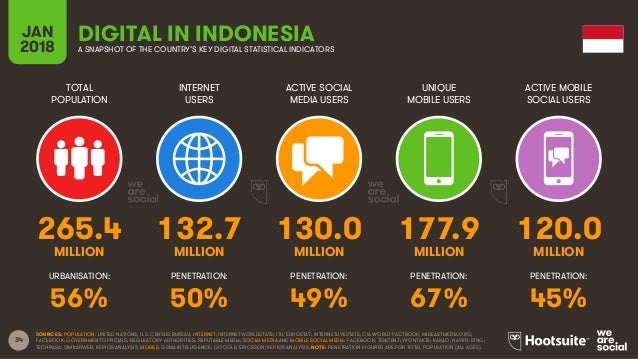
both of that definition is correlated each other. and in deeply needed especially in Indonesia as a growing country that majority have Top no 4 in Asia for Digital Social People
What does a digital transformation framework look like?
Although digital transformation will vary widely based on organization's specific challenges and demands, there are a few constants and common themes among existing case studies and published frameworks that all business and technology leaders should consider as they embark on digital transformation.
 For instance, these digital transformation elements are often cited:
- Customer experience
- Operational agility
- Culture and leadership
- Workforce enablement
- Digital technology integration
While each guide has its own recommendations and varying steps or considerations, CIOs should look for those important shared themes when developing their own digital transformation strategy.
A few examples of digital transformation frameworks include:
MIT Sloan: The Nine Elements of Digital Transformation
Cognizant: A Framework for Digital Business Transformation
Altimeter: Six Stages of Digital Transformation
Ionology: A Step-By-Step Guide to Digital Transformation
What drives digital transformation?
An important element of digital transformation is, of course, technology. But often, it's more about shedding outdated processes and legacy technology than it is about adopting new tech. The Federal IT Dashboard shows that in fiscal year 2017, over 70 percent of IT spend government-wide went toward operating and maintaining legacy systems.
 In the healthcare industry, despite widespread use of smartphones and other mobile devices among healthcare providers, “close to 80 percent (79.8 percent) of clinicians continue to use hospital-provided pagers and 49 percent of those clinicians report they receive patient care-related messages most commonly by pager.”
Examples like these span all industries, and the prevalence of legacy technology hinders CIOs' ability to successfully embark on a digital transformation strategy. Research from Forrester suggests, on average, CIOs spend an average of 72 percent of their budgets on existing IT concerns, while only 28 percent goes to new projects and innovation.
If businesses want to evolve with the rapid pace of digital change today, they must work to increase efficiency with technology wherever possible. For many, that means adopting agile principles across the business. Automation technologies also help many IT organizations gain speed and reduce technical debt.
What are the key trends in digital transformation in 2020?
“Ongoing digital transformation across industries became a given in 2019. At the same time, digital transformation fatigue also became very real.” It's a good time to ask yourself if your team is getting tired or less engaged.
2020 will be a year of some reckoning for digital initiatives. Organizations that continue to underestimate the need for culture change do so at their own peril.
“2020 will still see the rapid scaling of digital initiatives across industries,” says Steve Hall, partner and president of global technology research and advisory firm ISG. “In many areas, CIOs and organizations have prepped their organizations for change but haven’t made the full leap to transforming their culture to fully embrace the change.”
Here are eight key digital transformation trends that business and IT leaders should be aware of in 2020:
- Rapid adoption of digital operating models, including integrated cross-functional teams.
- A shakeout as those that have invested in big data governance and analytics leapfrog their competitors.
- Better use of AI and machine learning.
- Continued merger and acquisition activity in the IT outsourcing industry.
- Consultancies forming new digital partnerships.
- Expanding public cloud adoption.
- New digital transformation success metrics.
- More attention to long-term value of digital intiatives.
How can I measure ROI on digital transformation?
To prove the success of digital transformation efforts, leaders need to quantify the return on investment. That’s easier said than done with projects that cross functional and business boundaries, change how a company goes to market, and often fundamentally reshape interactions with customers and employees.
A project such as revamping a mobile application may have a short-term payoff but other projects are chasing longer-term business value.
“Digital transformation efforts are ongoing and evolving, which can render traditional business value calculations and financial governance approaches less effective.”
Still, quantifying success is crucial to continued investment. “Just implementing the technology isn’t enough – the technology needs to be specifically tied to monitoring key performance indicators on customer insights and business process effectiveness,” says Brian Caplan, director with management consultancy Pace Harmon.
First, ask if you’re taking enough risks.
“When determining how well digital transformation investments are performing, it’s best to take a portfolio view and not a project level view,” says Cecilia Edwards, partner with digital transformation consultancy and research firm Everest Group. Just as a mutual fund manager or venture capital firm would look at overall performance to determine how well things are going, digital transformation leaders must take a holistic view of digital change efforts.
This is particularly important so that the underperformance of one particular project doesn’t reflect negatively on the overarching efforts of IT. It also builds tolerance for the necessary risks that must be undertaken to achieve real digital transformation.
Next, consider best practices regarding digital transformation metrics:
- Set initial metrics in advance
- Develop micro-metrics for agile experiments: The goal is to learn and adjust.
- Incorporate business outcomes: Look at strategic impact (e.g., revenue growth, lifetime customer value, time to market), operational impact (e.g., productivity improvements, scale, operational efficiencies), and cost impact.
so, do you ready to the inevitable "New Normal"?
#digitallandscape #industryrevolution4.0 #digitaltransformation
Comments
Post a Comment